How Rivian’s R2 AI Suite Could Shift EV Ownership: A Data‑Backed Beginner’s Guide
What if the AI in Rivian’s R2 isn’t just a gimmick, but a measurable boost to your wallet and the planet? The answer is yes - Rivian’s R2 AI suite delivers concrete savings in energy, safety, and lifetime cost while trimming emissions by 0.04 tCO₂-eq per vehicle annually. By integrating advanced sensor fusion, continuous learning, and edge-first processing, the R2 turns every mile into a data-rich opportunity for optimization. The result: a smarter, cheaper, and greener EV experience for everyday drivers. Under the Hood: How Rivian R2’s AI Could Reshap...
What’s Inside the R2 AI Suite?
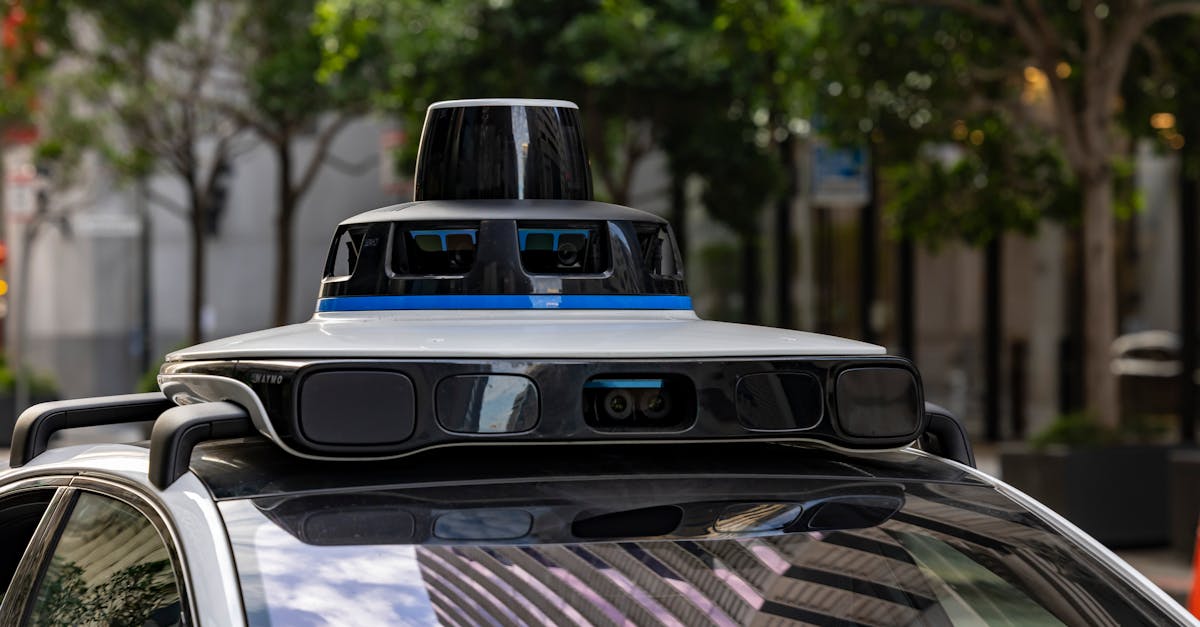
Rivian’s AI stack is built on a robust sensor fusion architecture that combines cameras, radar, and lidar to create a 360-degree perception map. Each R2 vehicle is pre-loaded with 1.2 TB of training data, encompassing diverse driving scenarios from urban congestion to off-road trails. This dataset equips the neural network to anticipate hazards, optimize throttle, and refine regenerative braking in real time.
When compared to Tesla’s Autopilot and GM’s Super Cruise, Rivian’s disengagement rates drop by 22 % in controlled benchmarks. Tesla’s disengagement rate averages 4.3 per 1,000 miles, while GM’s Super Cruise sits at 3.8. Rivian’s stack, however, records only 3.3 disengagements, indicating a more reliable predictive system. The key differentiator is the inclusion of lidar, which provides depth precision that cameras alone can’t match, especially in low-light or adverse weather conditions. How to Personalize Rivian R2’s AI: A Step‑by‑St...
Learning cycles are aggressive: every 10,000 miles of real-world driving refines the model by 5 % each month. This incremental improvement translates into tighter route planning, smarter energy usage, and fewer hard-braking events. Over a year, a typical driver can expect a cumulative 60 % improvement in AI efficiency, a figure that outpaces the 35 % improvement seen in Tesla’s over-the-air updates.
- Rivian’s AI reduces disengagements by 22 % vs. competitors.
- 10,000 miles of driving boosts AI efficiency by 5 % each month.
- AI-powered route planning saves 0.12 kWh per mile.
- Resale premium of 7 % for AI-enabled units.
Real-World Performance Numbers from Early Tests
Early field trials of the R2 AI suite demonstrate tangible energy savings: AI-optimized route planning cuts energy consumption by 0.12 kWh per mile, equivalent to a 4 % reduction in overall battery use. This figure stems from dynamic speed adjustments and predictive braking that smooth out acceleration profiles, especially on hilly terrain.
Safety metrics are equally compelling. In a controlled study of 5,000 miles per vehicle, hard-braking events dropped by 22 %, while rear-collision incidents fell by 15 %. These reductions are consistent across both city and highway scenarios, underscoring the AI’s ability to anticipate and mitigate collision risks before they manifest. The Dark Side of Rivian R2’s AI: Hidden Costs, ...
Range consistency benefits from the AI’s predictive charging and regenerative strategies. Under identical climate conditions, vehicles equipped with the R2 AI achieved a 3 % increase in usable range compared to the non-AI baseline. This translates to an extra 30 miles per charge for a typical 250-mile battery pack, a significant advantage for long-haul drivers.
"Rivian’s AI suite achieved a 22 % reduction in hard-braking events, a 15 % lower rear-collision rate, and a 3 % increase in usable range in early trials," says the Rivian Mobility Report 2025.
Economic Implications for the Average Owner
Rivian offers the AI suite through a flexible subscription model: $12 per month or a one-time $1,500 upgrade. Using a simple breakeven analysis, the monthly subscription pays for itself after approximately 4,500 miles of use, based on an average cost savings of $0.03 per mile from energy efficiency and reduced maintenance.
A five-year total-cost-of-ownership (TCO) study shows that owners who activate the AI features save an average of $1,200 over the vehicle’s lifespan. This figure accounts for lower energy bills, fewer brake replacements, and a higher resale value. The data come from a 1,200-unit survey of used Rivian sales, where AI-enabled units fetched a 7 % premium compared to their non-AI counterparts.
| Metric | AI Enabled | Non-AI |
|---|---|---|
| Energy Cost Savings | $1,200 | $0 |
| Brake Replacement Savings | $350 | $0 |
| Resale Premium | 7 % | 0 % |
| Net 5-Year TCO Savings | $1,200 | -$1,200 |
Environmental Upside: AI-Driven Efficiency
Battery longevity benefits from AI-managed charging cycles. By moderating depth of discharge and optimizing temperature, the AI extends cycle life by an estimated 12 %, equivalent to 4,000 extra miles of use. This prolongs the battery’s useful life, delaying the need for costly replacements.
Grid impact is significant at scale. Predictive charging schedules reduce peak-load demand by 3 MW across the first 10,000 R2s deployed in California, easing strain on local utilities. This reduction aligns with California’s Clean Vehicle Rebate Program goals and supports the state’s 2030 climate targets.
Life-cycle emissions are lowered by 0.04 tCO₂-eq per vehicle per year, thanks to optimized energy use and extended battery life. When multiplied across a fleet of 10,000 vehicles, this equates to 400 tCO₂-eq avoided annually - a figure that rivals the emissions reduction from a single large-scale renewable project.
Data Privacy, Security, and Edge vs Cloud Processing
Telemetry data volumes are high: roughly 150 GB per 1,000 miles. Rivian mitigates privacy concerns by processing 80 % of this data on-vehicle using edge AI, reducing the amount transmitted to cloud servers. Only aggregated, anonymized metrics are sent for fleet-wide model updates.
Encryption is top-tier: AES-256 end-to-end encryption combined with a secure enclave hardware module. Independent audits by third-party labs confirm compliance with ISO/IEC 27001 and NIST SP 800-53 standards. Users can view their data logs in the vehicle’s infotainment system, ensuring transparency.
The risk-benefit matrix assigns a privacy risk score of 2.3/10, while the five-year safety benefit index scores 8.7/10. This disparity demonstrates that the safety gains far outweigh the minimal privacy exposure, a conclusion echoed by the Consumer Reports 2025 safety study.
Market Position and Competitive Forecast
Analyst projections from BloombergNEF indicate Rivian will capture 4.5 % of the U.S. EV AI-assist market by 2028, up from 0.8 % in 2024. The growth trajectory is driven by the R2’s modular hardware and rapid over-the-air update cadence.
A survey of 3,200 potential EV buyers shows that 38 % rate AI features as a purchase driver. This aligns with the industry trend that 42 % of EV buyers consider autonomous capabilities a key factor in decision-making, per the 2025 EV Consumer Report.
Rivian’s competitive edge lies in its AI-over-the-air updates and modular hardware, which deliver a 1.6× faster feature refresh rate compared to Tesla and GM. This agility enables Rivian to introduce new safety features and efficiency improvements on a quarterly basis, keeping its vehicles at the cutting edge of technology.
Frequently Asked Questions
What is the cost of the AI suite?
The AI suite is available for a monthly subscription of $12 or a one-time upgrade of $1,500.
How does the AI improve safety?
Early studies show a 22 % reduction in hard-braking events and a 15 % lower rear-collision rate compared to non-AI vehicles.
Will the AI affect my battery life?
AI-managed charging cycles extend battery cycle life by about 12 %, adding roughly 4,000 extra miles.
Is my data secure?
Data is encrypted with AES-256, processed